


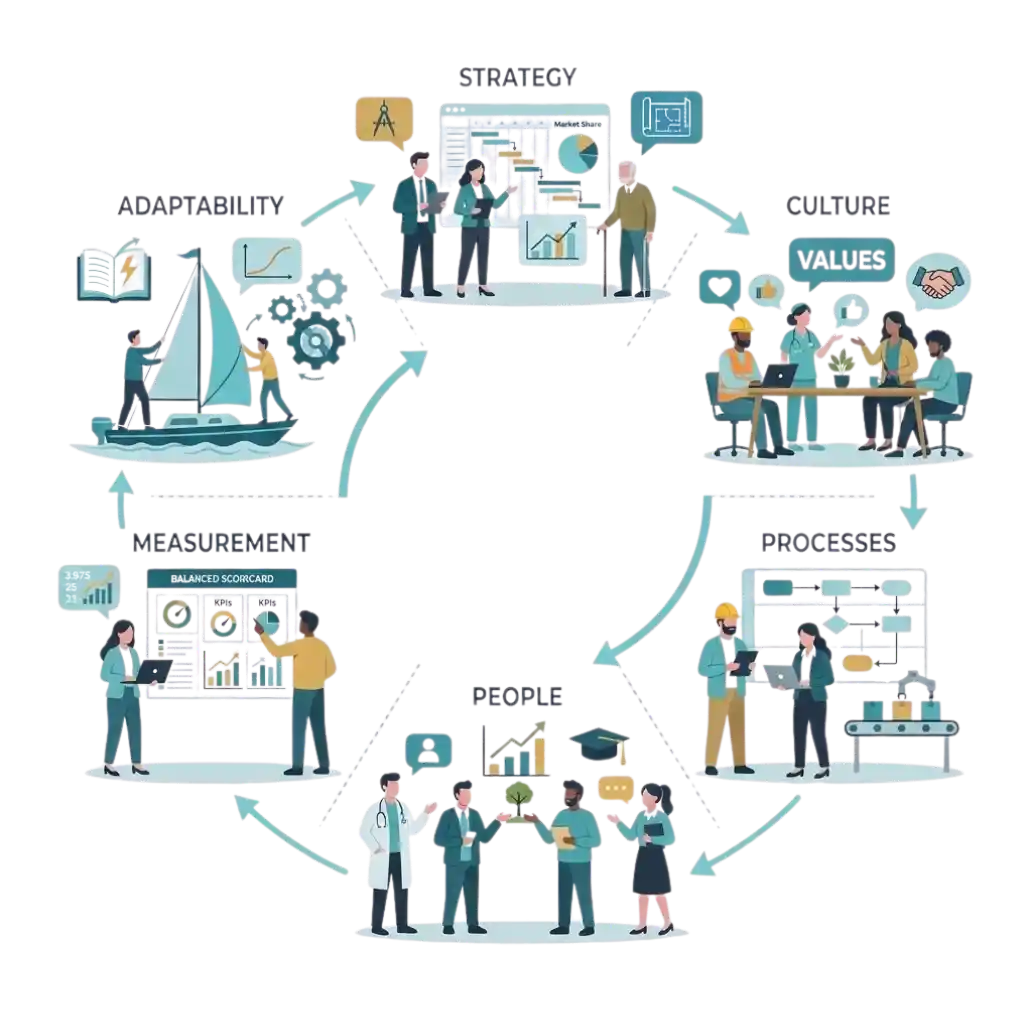
Organisational effectiveness is the ability of an organisation to consistently achieve its intended outcomes while adapting to internal and external changes.
It is not just about hitting targets, it is about doing so efficiently, sustainably, and with full alignment across people, processes, strategy, and culture.
In 2026, McKinsey reports that organisations with high effectiveness scores grow revenue 2.5× faster than their peers. Gallup shows that only 23% of employees worldwide are actively engaged, the single biggest drag on effectiveness.
The gap between strategy and execution, vision and reality, is now measurable in the billions
This Page answers the questions every C-suite leader is asking:

The classic model that shows how hard elements (Strategy, Structure, Systems) and soft elements (Shared Values, Skills, Style, Staff) must align. Misalignment in any one area collapses the rest.

Lorem ipsum dolor sit amet, consectetur adipiscing elit. Integer facilisis at ante eu fermentum. Maecenas


Maps organisations across two axes: internal vs external focus, and flexibility vs stability. Reveals whether your culture is Clan, Adhocracy, Market, or Hierarchy dominant.

Lorem ipsum dolor sit amet, consectetur adipiscing elit. Integer facilisis at ante eu fermentum. Maecenas

Focuses on how well the organisation meets its stated objectives through resource optimisation and stakeholder satisfaction.

Lorem ipsum dolor sit amet, consectetur adipiscing elit. Integer facilisis at ante eu fermentum. Maecenas
These models are excellent diagnostic tools. But they all share one critical weakness: they are top-down, consultant-led, and rarely become lived by the entire organisation. That is where the Blueprints Method changes everything.
Silos remain the silent killer of organisational effectiveness. In 2026, McKinsey reports that fragmented departments waste between 30–40% of productive capacity through duplicated effort, conflicting priorities, and poor hand-offs. Leaders set enterprise goals, yet teams optimise locally — marketing chases brand awareness while sales chases short-term revenue, creating invisible drag on the entire system.
The deeper issue is the absence of a shared language and visible connection between daily work and the bigger picture. When employees cannot see how their role contributes to the North Star, motivation drops and execution fractures.
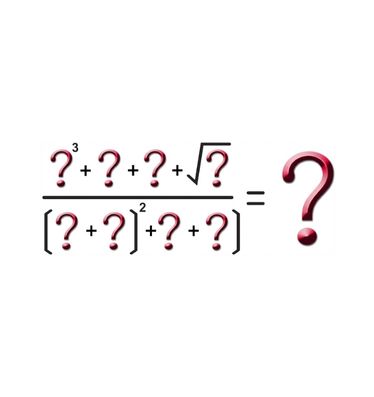
Blueprints addresses this by surfacing the organisation's true DNA through anonymous, inclusive input, then codifying it into a single, visual Formula that every person can understand and own. The result is alignment that feels co-created rather than imposed.
Many organisations are flying blind with outdated scorecards. Financial KPIs and quarterly reports tell what happened last quarter, but they reveal almost nothing about whether the organisation is actually becoming more effective right now.
Gallup’s 2026 data shows that only 29% of leaders feel confident their current metrics predict future performance. This lag creates dangerous blind spots ; especially in fast-moving environments where AI adoption, hybrid work, and regulatory shifts happen weekly.
The Blueprints Cultural Health Index changes this by providing a score based on the lived experience of every employee. It turns intangible factors (trust, clarity, psychological safety) into measurable leading indicators that leaders can act on before problems compound.
Change fatigue is at an all-time high. BCG's 2026 survey found that 68% of transformation initiatives fail because people resist rather than embrace them. AI is the latest flashpoint: employees fear job loss, leaders fear capability gaps, and the organisation stalls.
The root cause is almost always the same: people were not involved in shaping the change. Top-down mandates create disablers (fear, cynicism, passive resistance) that the Formula is specifically designed to surface and convert into enablers.
By asking every employee two simple questions and turning their collective voice into a living visual Formula, Blueprints creates genuine ownership. Resistance drops dramatically when people see their input reflected in the organisation's direction.
The biggest bottleneck in most organisations today is not the C-suite , it is the layer of leaders who actually translate strategy into daily execution. Harvard Business Review (2026) calls this the “frozen middle.”
These leaders are expected to coach, align, and drive performance, yet they rarely receive structured feedback on how well they are doing it. The result is inconsistent leadership quality and diluted effectiveness as messages get lost or distorted through layers.
Blueprints’ Leadership Accountability Metrics (LAMs) close this gap by giving every leader clear, data-backed feedback from their own teams after each measurement cycle ; turning leadership development from an annual event into a continuous, measurable practice.
Organisations are drowning in dashboards but starving for insight. Employee surveys, engagement scores, and performance data pile up, yet leaders still struggle to know what to fix first.
The problem is fragmentation — different tools measure different things with no single source of truth.
Blueprints solves this by distilling thousands of employee voices into ten clear enablers and ten clear disablers, then presenting them in one visual, algebraic Formula that everyone can understand and act upon.
Suddenly, data becomes direction.
Quarterly targets and investor pressure push leaders toward quick wins at the expense of sustainable capability building.
This “short-termism” is now recognised as one of the top destroyers of organisational effectiveness.
Blueprints counters this by creating a living system that tracks both immediate actions and long-term cultural health. The Index shows leaders the health of the organisation’s “invisible balance sheet” — the intangible assets that determine whether today’s results will still be possible in three years’ time.
Despite record investment in engagement tools, global active engagement remains stuck at 23% (Gallup 2026). Employees show up, do the minimum, and quietly look for the exit.
The core issue is simple: most people do not feel truly heard or connected to the bigger purpose.
Blueprints’ inclusive, anonymous process; where every voice shapes the Formula; creates the psychological safety and ownership that turns detachment into commitment.
.webp)
.webp)
Leaders receive feedback on the results of their most recent measurement in a coaching session. This highlights actions recommended to improve effectiveness & how well they fed back & acted on previous recommendations.
Blueprints is an inclusive process involving all employees. It enables employees to understand their place in the bigger picture, and how their efforts can truly make a difference.
“Tell me and I forget, teach me and I may remember, involve me and I learn.”
Creates a common framework to align the efforts of different organisational units toward a common goal. This promotes collaboration & teamwork across all areas within the organisation.
Strategy comes to life as employees understand how they can direct their efforts to achieve strategic objectives.
Through co-creation strategy is brought to life & lived in the culture of the organisation.
Energy in the organisation is aligned to best support achieving its long-term goals & purpose.
Aligning the structure of an organisation with its strategy is necessary for it to deliver its plans &achieve success.
Regular measurement helps discover areas where the structure could adapt to better support the execution of the organisation's strategy.
Businesses transform by fundamentally changing the way they are run. Empowering employees to actively engage in business transformation through a bottom-up process helps transform the organisation more fundamentally than centralised top-down transformation efforts.
Blueprints provides a systematic approach to change management. It diagnoses the organisation's current state, its future desired state, & the practices & principles needed to effect the change. It also provides a structured way to track progress between its current & future desired state.
Provides a strategic plan & implementation framework to focus the organisation's unique cultural assets.
This enables beneficial cultural practices which benefit the organisational community to be enhanced. It also highlights potential negative aspects of the organisational culture & suggests possible improvement opportunities.
Provides a systematic way for innovative solutions from different levels of the organisation to reach leadership.
The measurement process highlights innovative suggestions. These are then unpacked in feedback sessions between leaders & their people. Actions are then decided on, implemented & iteratively refined.
Provides a unique way to communicate the organisation's EVP to current & future employees.
The formula discovery process highlights practices & principles which may improve or harm the employee experience. These can then be iteratively improved during the formula measurement process based on actions suggested by employees.
The formula enables tracking performance of various business units & departments in an organisation.
It also provides a way for employees to consider their various actions, roles & responsibilities.
Increases the ability of the organisation to achieve its objectives.
Aligning the efforts of leadership & employees focuses energy in more productive ways. This co-created culture drives the discovery of the most innovative ideas to improve organisational effectiveness.
Can integrate into a health & wellness strategy.
The formula can highlight practices & principles which help & hinder wellness. Regular measurement can generate suggestions to improve health & wellness to achieve holistic health.
Integrate the formula into all internal branding & communication.
Use the formula as a platform for dialogue & empowerment. Micro-formulas can brand & communicate the specific priorities of each business unit & department.
Can communicate a set of inspiring characteristics that the organisation's leaders aspire to live by.
The formula ensures these characteristics are communicated in a way which is readily understood by all. Measurement can highlight areas of strength, areas needing development, & surface improvement suggestions.
The business philosophy of an organisation can be outlined using a co-created formula.
This formula outlines the overall purpose of the organisation, along with its goals in a visual way. This brings the philosophy of the organisation to life in a way that all employees can identify with. Using a formula ensures that the organisation can measure the degree to which it is living its philosophy.
Can be used to identify, assess & mitigate risks to the organisation.
Areas of concern can be identified in the measurement process, & improvement suggestions from employees can highlight ways to mitigate risks.
Can predict future performance & highlight future areas of concern through forward-thinking insights & predictions.
Leadership Accountability Metrics provide KPIs to ensure that leaders are accountable for their implementation of the formula.
Provides a practical representation of the organisations 'invisible balance sheet’.
This ensures that the intangible assets & liabilities of the organisation are brought to life. Measurement of the formula ensures that these previously intangible aspects of the organisation can now be actively managed & improvements suggested.
The formula reveals gaps between current & desired levels of organisational performance.
By comparing results by various demographics, areas which are excelling vs. areas which need development can be determined. Actions suggested by employees in each measurement can be used to close the gap between current & desired performance
Leadership competency frameworks can be developed in line with the formula to ensure that leaders develop the competencies needed to successfully lead the organisation & implement its philosophy.
Organisations can determine the skills & skill levels needed by employees to perform their work effectively. The formula can be used as a guide on which skills & characteristics are needed for employees to succeed.
Can be used to plan for & develop the required human competencies for organisational success.
Areas with skills shortages & those needing specific skills can be determined. Future talent needs can be anticipated & accounted for. Practices & principles which attract & retain talent can be increased, while those which result in a loss of talent can be reduced.

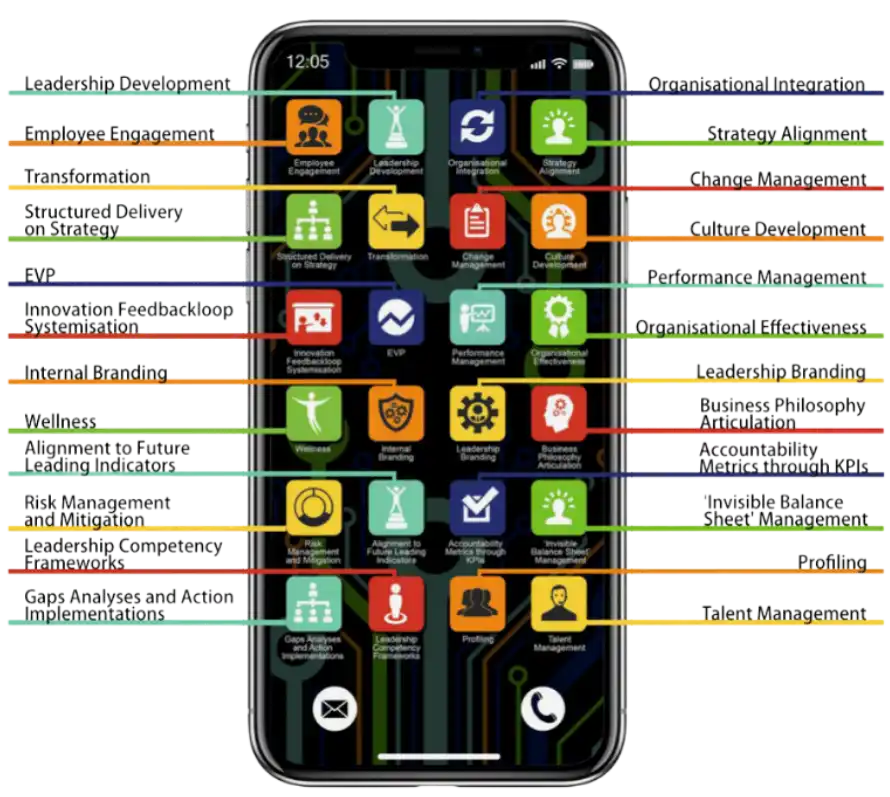
When all these apps run on one unified operating system, organisational effectiveness stops being a quarterly report and becomes a living, breathing reality.
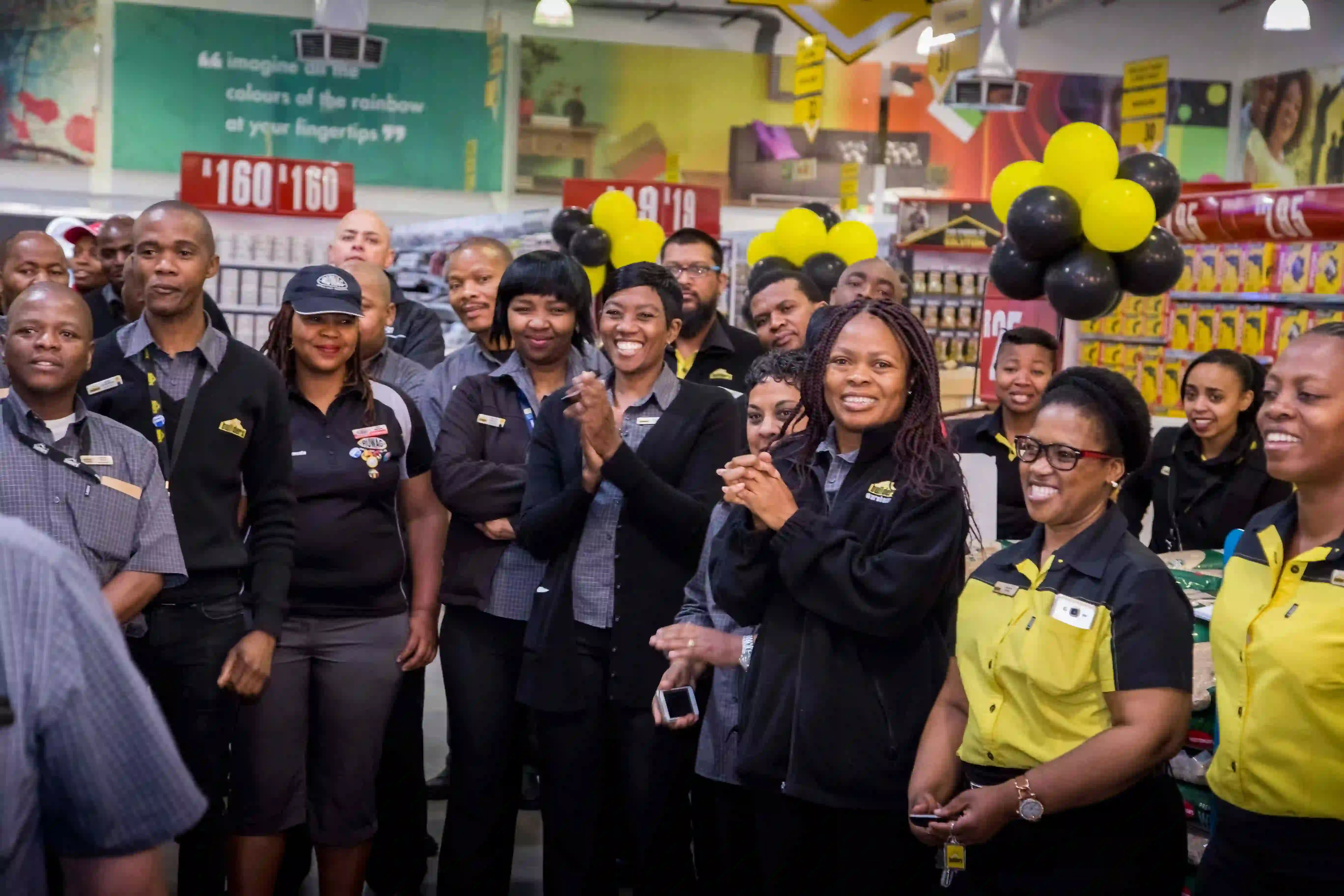
When Massbuild's leadership confronted stagnating growth and disjointed brands, they recognized that traditional strategy was not enough. Blueprints partnered with them to co-create a living "Formula for Success" built from the voices of 7,000 employees.
See how the philosophy you've just read about becomes a real-world transformation engine.
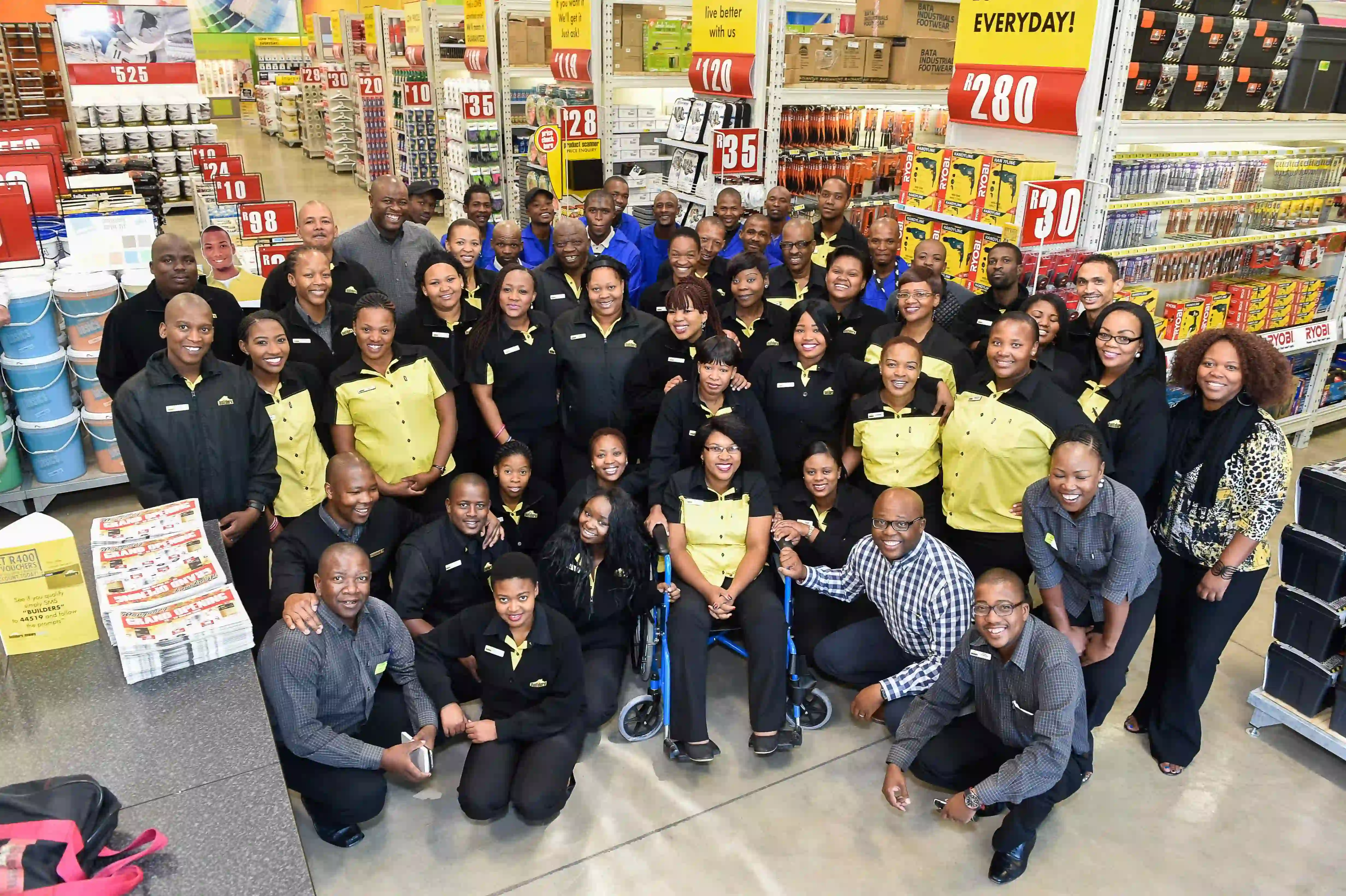
“Of the three million things I’ve ever done in the corporate environment, this was by far the most valuable. I have no hesitation whatsoever, in recommending Blueprints to whomever aspires to any organisation serious about aligning its people to execute strategy.”

.png)